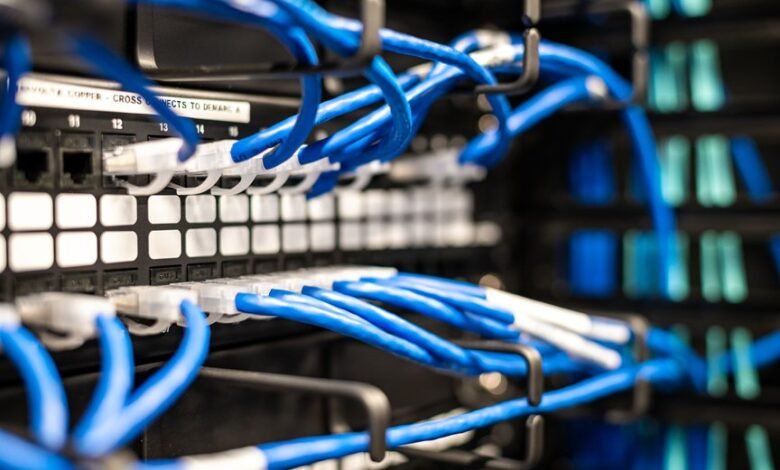
The 10.10.100 Private Network Configuration Guide presents a scalable framework for subnet sizing, routing, and segmentation. It emphasizes dual IPv4 planning to minimize waste while supporting growth, and a modular routing design to reduce broadcasts. Security is layered, with strict segmentation, access control, and continuous visibility. The guide also covers hardening, monitoring, and incident response, including privacy protections and post-fix validation. Its approach invites consideration of practical trade-offs and future-proofing, inviting closer examination of its recommendations.
How to Choose and Size the 10.10.100 Subnet for Your Network
Selecting an appropriate 10.10.100 subnet depends on forecasted device count and growth. The consultant applies dual subnetting to balance growth and isolation, while adhering to IPv4 planning principles.
Network designers assess current usage, peak demand, and future expansion, selecting subnet sizes that minimize waste and maximize efficiency. Documentation notes constraints, risk tolerance, and management responsibilities for scalable, adaptable private addressing.
Setting Up Routing and Segmentation for a Private 10.10.100 Network
Setting up routing and segmentation for a private 10.10.100 network requires a clear architecture that supports scalable communication while containing broadcast domains.
The design emphasizes deliberate internet routing policies, boundary routers, and modular segments.
Routing tables are minimized through summarization and hierarchical design.
Segmentation prioritizes controlled interconnectivity, access control, and predictable latency, enabling freedom to evolve networks without compromising traceability or security within the private range.
Hardening, Monitoring, and Privacy Protections for the 10.10.100 Range
Hardening, monitoring, and privacy protections for the 10.10.100 range require a layered, risk-aware approach that combines preventive controls with continuous visibility.
The evaluation emphasizes threat modeling to anticipate adversary methods and to map residual risk.
Privacy allies collaborate across teams to embed controls, while monitoring confirms policy adherence, data minimization, and rapid incident containment within a freedom-oriented, defensible network boundary.
Troubleshooting Common 10.10.100 Private Network Issues and Fixes
Troubleshooting common issues in the 10.10.100 private network requires a structured, methodical approach that leverages prior hardening and monitoring work. The analysis isolates connectivity faults, misconfigurations, and service degradation with repeatable steps. Systematic checks address drone safety considerations during remote operations and ensure flood prevention measures remain intact while restoring performance and validating security boundaries post-fix.
Frequently Asked Questions
What Are Common Pitfalls When Migrating to a 10.10.100 Private Network?
Migration pitfalls include underestimated complexity and data alignment issues, while scalability concerns center on evolving throughput, address space, and management overhead; stakeholders must anticipate interoperability gaps, policy drift, and ongoing optimization to sustain freedom and resilient private network performance.
Can 10.10.100 Interfere With Public IP Configurations?
Inter networking concerns arise when 10.10.100 intersects public IPs, potentially causing routing conflicts and address resolution issues. The answer emphasizes careful IP addressing schemes to prevent overlap, ensuring seamless coexistence with public configurations and preserving user autonomy.
How Do I Test Network Isolation for 10.10.100 Safely?
Latency testing and IPv6 readiness assessments should be conducted in a controlled environment to verify network isolation safely. The approach remains precise, formal, and concise, while enabling freedom to explore results and adjust configurations, minimizing cross-network interference.
Are There Best Practices for DHCP in a 10.10.100 Network?
Symbolically, guidance emerges as a quiet beacon. The answer: Best practices for DHCP in 10.10.100 emphasize conflict avoidance and disciplined address allocation, centralized lease management, scoped ranges, and auditing, ensuring predictable, secure, and freedom-friendly network operation.
What Licensing or Compliance Concerns Apply to 10.10.100 Setups?
Licensing compliance and regulatory considerations apply to 10.10.100 setups, requiring adherence to vendor terms, software licenses, and data protection obligations. The configuration must align with applicable laws, auditing capabilities, and documented governance while preserving operational flexibility and security.
Conclusion
The guide presents a scalable, dual-subnet, IPv4-centric approach to the 10.10.100 private network, emphasizing modular routing, strict segmentation, and layered security. It advocates continuous visibility, threat modeling, and repeatable remediation within privacy-conscious, drone-safe remote operations. By aligning sizing, monitoring, and incident response, organizations gain predictable latency and traceability. Is this integrated, repeatable framework sufficiently resilient to evolving threats while preserving privacy and performance across growing deployments?