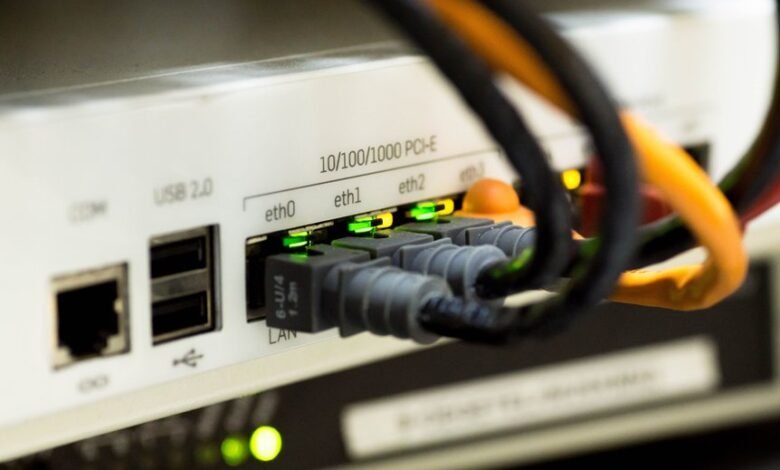
The guide examines why a router might advertise or operate on 192.100.1, a nonstandard or misformatted address. It outlines symptoms such as misrouted traffic and invalid routing, and emphasizes verification of DHCP, gateway, and subnet settings. Technical readers are guided through quick checks and common causes, with step-by-step fixes designed to restore proper addressing and DNS consistency. The discussion stops short of a full resolution, inviting further examination of topology and firmware implications.
What 192.100.1 Means and Why It Appears
The IP address 192.100.1 is a private-classless notation that appears when routing or device configuration uses nonstandard or misformatted blocks.
The phenomenon signals invalid routing and misrouted traffic, often stemming from improper subnet basics.
Network conflicts arise as overlapping ranges collide with DHCP scope assignments, causing errant leases.
Resolution involves consistent addressing, validated masks, and disciplined scope allocation to restore reliable connectivity.
Quick Checks to Confirm Your Router’s IP
Quick checks to confirm the router’s IP involve verifying the device’s network settings and status indicators to ensure the default gateway matches the intended subnet.
Network diagnostics assess router branding consistency, confirm the correct subnet, and detect an incorrect subnet.
If mismatches appear, an invalid IP address is suspected, prompting careful configuration review, firmware alignment, and remote management accessibility.
Common Causes of “Invalid Router IP Address
Common causes of an invalid router IP address arise from misconfigurations, firmware inconsistencies, or network topology changes. Improper DHCP scope, static IP conflicts, or gateway misentries disrupt address validity. Firmware bugs can alter subnet handling, while recent device additions introduce conflicting routes.
User-level observations reveal irrelevant discussion and off topic chatter that distract from core diagnostics, hindering precise isolation of the invalid IP condition.
Step-by-Step Fixes That Really Work
A systematic sequence of fixes is presented to address invalid router IP addresses, starting with verification of DHCP settings, subnet configuration, and gateway entries to identify the primary source of invalidity.
The procedure remains precise, technical, and concise, detailing steps for device reconfiguration, firmware checks, and reboot cycles.
It also considers discussion ideas and unrelated topics as contextual references for troubleshooting clarity.
Frequently Asked Questions
Can a Wrong IP Affect Connected Devices Differently?
Yes, a wrong IP can cause disparities: some devices may lose connectivity while others retain partial access. It creates wrong subnet segmentation, triggering device isolation for affected hosts and forcing selective traffic disruption across the network.
Is 192.100.1 a Private or Public IP?
The address 192.100.1 is public. Inaccurate subnet configuration introduces wrong subnet, elevates security risks, and complicates routing. Alternative phrasing: classify as public, while noting potential misrouting and exposure when used incorrectly.
Do Mobile Hotspots Use Router IPS?
Mobile hotspots can assign router-like IPs to devices on their local network, functioning as gateway devices rather than traditional ISP routers. Two word ideas: address allocation. Discussion topics: NAT behavior.
How Long Does a DNS Flush Take to Help?
DNS flush clears DNS cache almost instantly on client devices, but full network propagation may take minutes to hours; impacts include IP conflict avoidance and device isolation, while router firmware updates can extend or shorten resolution timing.
Can IPV6 Cause Conflicts With 192.100.1?
IPv6 conflicts can occur if devices prioritize IPv6 over IPv4, causing routing or address resolution issues; DNS caching may mask or delay detection. Properly monitoring dual-stack behavior and ensuring consistent DNS caching policies mitigates 192.100.1-like problems.
Conclusion
Conclusion:
In the grand theater of networking, 192.100.1 walks on stage as a misfit, delivering misrouted drama with impeccable timing. Satire aside, the reality is simple: incorrect IPs wreck reachability, so engineers perform methodical checks, reset scopes, and reboot theater props until the cast behaves. Precision, not punchlines, redeems the plot. When DHCP, gateways, and subnets align, the curtain rises on stable DNS and branding, and the audience—users—gets their content without intermission.